
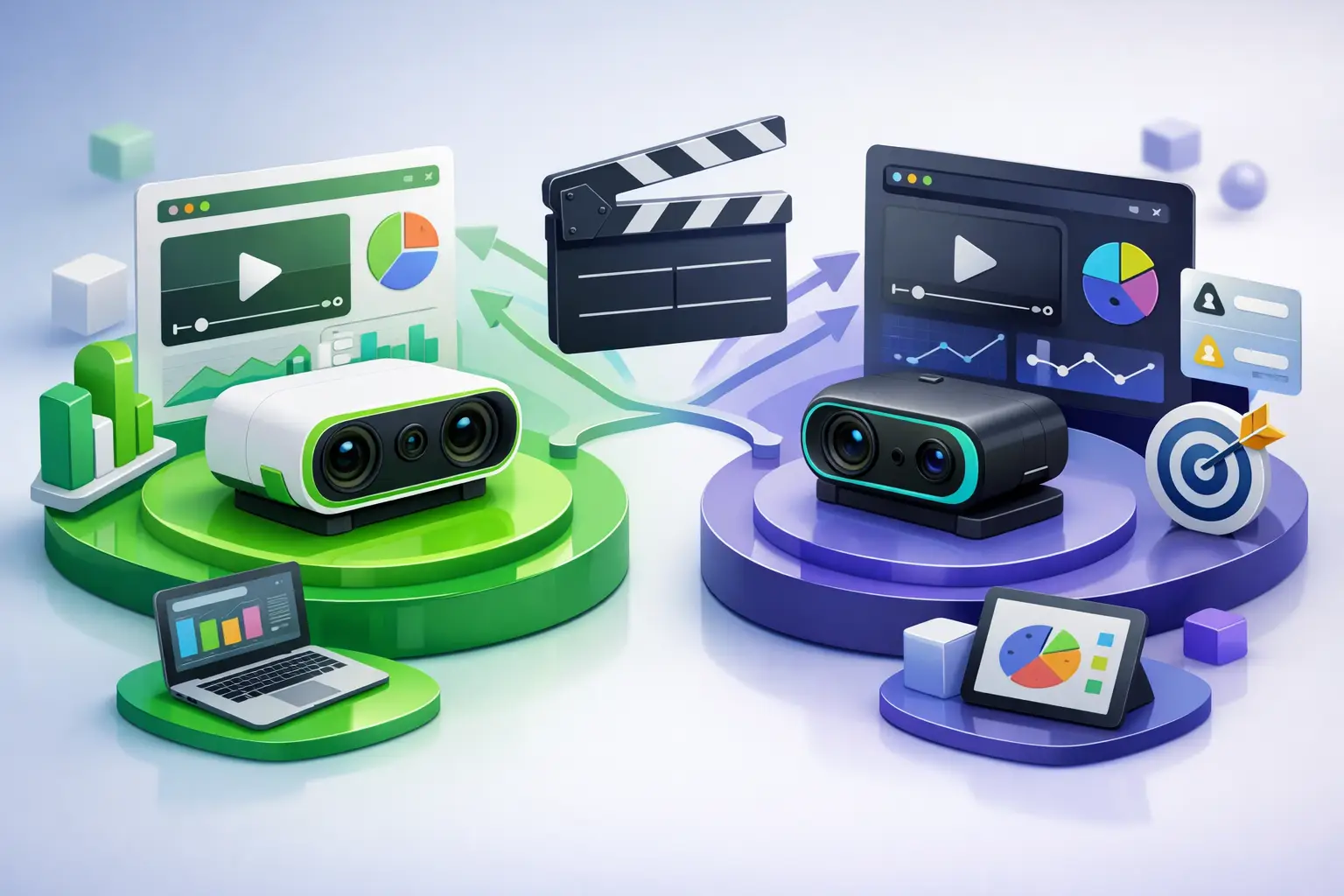
A product launch rarely needs one video. It needs a polished hero spot, several social cutdowns, fresh hooks for paid ads, lifestyle variations, and enough creative range to keep testing. That is where a practical Veo Kling comparison matters. Both models can create impressive AI video, but they tend to earn their place in different parts of a commercial workflow.
For marketers and creative teams, the right question is not which model looks best in a single demo. It is which one can produce the shot you need, with the control, speed, and iteration room your campaign requires. Veo is often the stronger choice for cinematic, prompt-led scenes with integrated audiovisual ambition. Kling is frequently favored for expressive motion, image-to-video work, and generating multiple visual directions quickly. The better model depends on the asset in front of you.
Veo Kling Comparison: The Fast Decision
Choose Veo when the concept depends on a polished, film-like moment that needs to carry a narrative. Think of a founder walking through a moody studio, a premium product reveal, or a branded scene where camera language, atmosphere, and sound are central to the idea. Its value is in turning a detailed creative brief into a more complete moving scene.
Choose Kling when you need to bring a strong key visual to life, test distinct motion treatments, or build energetic short-form content around a product image. It is particularly useful when your team already has a defined art direction from a generated image, product render, or campaign still and needs animation that preserves that direction.
That division is not absolute. Either model can make a compelling social clip, and results change with the prompt, source image, settings, and model version available in your workspace. But using each model for its natural strengths reduces wasted generations.
Where Veo Fits Best
Veo is built for creators who think in scenes rather than isolated motion. A strong prompt can describe the subject, location, action, camera movement, lighting, style, pacing, and, where supported, audio intent. That makes it attractive for ads that need more than visual movement. It can help establish a world around the product.
For example, a skincare brand may need a calm, high-end spot: early morning light, a close-up of condensation on a glass bottle, a hand lifting the product, and a measured push-in from the camera. Veo is a sensible first choice when the goal is a composed sequence with a cinematic feel instead of a simple animated still.
Veo's marketing advantages
Its primary advantage is creative coherence at the scene level. When the model interprets a detailed direction well, the output can feel closer to a purposeful commercial shot than a generic clip. That is valuable for landing-page heroes, brand launches, and top-of-funnel ads where the first two seconds must establish quality.
Veo can also be a better fit when audio is part of the concept. A scene that calls for environmental sound, spoken lines, or a specific audiovisual rhythm is easier to assess as a unified asset than as separate video and sound tasks. Marketers should still review dialogue, pronunciation, music rights, and brand-safe messaging before publishing. Generated audio can save time, but it is not a substitute for quality control.
Veo's trade-offs
The same ambition that makes Veo useful can make it less efficient for rapid variation. A heavily specified scene has more ways to drift from the brief: product details may shift, text may render incorrectly, action can become too literal, and a complex sequence may require several iterations before it is usable.
It is also not the first tool to reach for when the campaign is built around a fixed packshot or brand image that must remain visually exact. For those cases, start with the approved image, protect the product's defining details, and use image-to-video generation or post-production to add motion. AI video remains strongest when it is given room to create, not when it is asked to reproduce every pixel perfectly.
Where Kling Fits Best
Kling often earns its place through motion. It is a useful engine for turning still concepts into active content: a model shifts their posture, fabric catches wind, a camera moves around a product, or an illustrated character enters a short social sequence. For teams producing a constant flow of visual tests, that flexibility can be more valuable than one highly elaborate hero scene.
A direct-to-consumer brand might generate five product lifestyle images, then use Kling to create different motion versions from the best two. One can become a slow, premium beauty shot. Another can become an energetic vertical ad with a quick camera move. The team keeps the winning composition while testing the emotional impact of movement.
Kling's marketing advantages
Kling is especially practical for image-to-video workflows. That matters because the still image is often where a team solves the hardest brand questions first: product placement, color palette, wardrobe, composition, and visual identity. Once that frame is approved, animation becomes a focused production task instead of another open-ended concept exercise.
It can also support a faster test-and-learn rhythm. Short-form performance creative does not always need a sweeping narrative. A persuasive clip may only need a clean opening frame, a product interaction, a visible benefit, and an edit-friendly ending. Kling can be an efficient way to create that motion layer across multiple concepts.
Kling's trade-offs
Motion quality is not the same as commercial readiness. A visually exciting animation can still fail a campaign if the product deforms, the hand interaction looks unnatural, or the final frame does not leave room for a headline and call to action. Check the entire clip, not just the first attractive second.
Kling may also require more planning around sound. If your ad depends on a voiceover, licensed track, brand mnemonic, or precise on-screen claim, treat video generation as one stage of a larger assembly process. That is often the right choice, but it means the final ad needs coordinated audio and editing rather than a single generated output.
Compare the Workflow, Not Just the Clip
The most useful Veo Kling comparison is based on the production job. Start by defining the deliverable before selecting a model.
If you need a cinematic concept video, write a scene brief. Include the audience, product role, setting, action, mood, camera behavior, duration, aspect ratio, and any spoken or sound elements. Generate a small set of Veo directions, then select the strongest foundation for refinement.
If you need performance variations, create or select the key image first. Make sure the product is recognizable and the composition has room for platform copy. Then use Kling to test movement, pacing, and camera treatment without rebuilding the visual concept from scratch.
For either model, avoid asking one generation to solve every layer of the ad. A reliable workflow separates the tasks: establish the visual idea, generate motion, add accurate copy and brand marks in a design tool, then combine approved voiceover, music, and editing. This protects the elements that must be exact while letting AI handle the parts where creative variation is valuable.
A Practical Model Selection Framework
Use Veo when narrative atmosphere, cinematic composition, and audiovisual storytelling are the core of the brief. Use Kling when an approved still needs motion, when content volume matters, or when your team wants to test multiple visual hooks efficiently.
Use both when the campaign has different jobs to do. Veo can establish the hero world for a launch, while Kling can turn campaign stills into a library of vertical cutdowns. The result is not a competition between models. It is a production system built around the strengths of each.
A unified studio such as Nox AI makes this approach more practical by keeping image generation, video models, voice, music, and ad assembly in one creative workspace. The goal is not to collect more AI tools. It is to move from a campaign idea to usable creative without losing momentum between tools and handoffs.
Before you publish, run every selected clip through a simple commercial check: Is the product accurate? Is the action believable? Does the opening frame stop the scroll? Is there clear space for the message? Does the audio support the brand? Those questions will do more for campaign performance than choosing a model based on a single viral example.
The best next move is to give both models the same brief, judge them against the final placement, and keep the winner for that specific job. Your creative pipeline gets faster when model choice becomes a repeatable production decision, not a debate.