



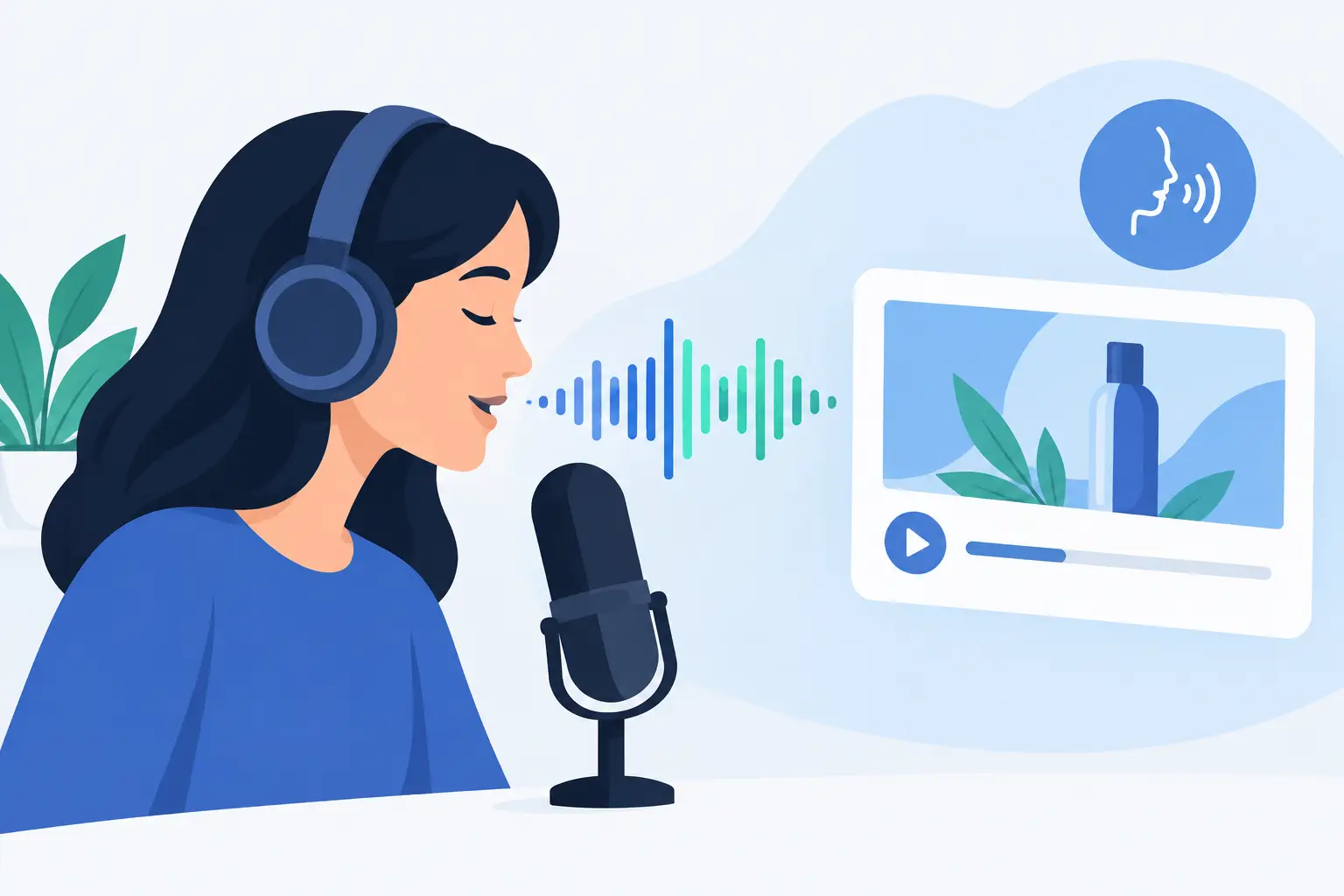
A weak voiceover can make polished product footage feel like a draft. A strong one gives a 15-second ad pace, credibility, and a reason to keep watching. This ElevenLabs narration quality review looks at the part marketers care about most: whether the output is convincing enough to use in customer-facing creative, not merely impressive in a demo.
For paid social, ecommerce video, explainers, and founder-led brand content, ElevenLabs can produce highly usable narration with speed that traditional voice workflows cannot match. The quality ceiling is high. The catch is that the first generation is not always the final take. Results depend on voice selection, script construction, pacing, pronunciation control, and how the audio is finished inside the full ad.
What ElevenLabs Does Well in Commercial Narration
The platform's strongest advantage is natural-sounding delivery. In a good generation, the voice has enough variation in emphasis, breathing, rhythm, and sentence flow to avoid the flat cadence that made earlier text-to-speech tools instantly recognizable. That matters when a viewer is deciding in the first few seconds whether an ad feels credible.
It also handles a wide range of commercial tones. Marketers can move from a clean, informative product demonstration to a warmer lifestyle read or a faster creator-style delivery without booking different talent for every concept. For teams testing multiple angles, hooks, offers, or customer segments, that flexibility changes the production math. A revised script can become a new audio take in minutes rather than days.
Voice consistency is another practical strength. Once a brand identifies a voice that fits its creative, it can use that same sound across product videos, paid ads, onboarding clips, social posts, and localized variants. Human voice talent may still be the right choice for a flagship campaign, but consistent AI narration is especially useful for the high volume of supporting creative that keeps campaigns fresh.
The output is generally strongest with short- to medium-length scripts written for speech. A 10- to 45-second ad read gives the model enough context to establish a tone without forcing it to sustain a complex emotional arc for several minutes. Clear product benefits, direct calls to action, and conversational sentences tend to perform well.
ElevenLabs Narration Quality Review: Where It Can Fall Short
Natural does not mean indistinguishable in every scenario. The most noticeable weaknesses usually appear when a script demands precise acting choices. Sarcasm, restrained excitement, vulnerability, escalating urgency, or a deliberately imperfect creator delivery can require several attempts. A human actor can interpret subtext and respond to live direction. An AI voice responds to the text and available controls, which is fast but less intuitive.
Pronunciation is another quality-control point. Brand names, product SKUs, industry acronyms, foreign words, and unusual place names can break the illusion if they are read incorrectly. This is manageable, but it requires review. Phonetic spelling, punctuation changes, and alternate wording often solve the issue more reliably than repeatedly generating the same line.
Long scripts can reveal small inconsistencies in energy and pacing. A voice may sound excellent in the opening paragraph, then become too even or place emphasis in an unexpected spot later on. For a two-minute explainer, it is often smarter to generate the script in logical sections and review each section as a separate performance. That gives editors more control over timing and makes replacement lines easier to manage.
There is also a brand-fit question. Some voices sound polished but overly announcer-like for brands that need an informal, social-native feel. Others may be so conversational that they lose authority in a financial, healthcare, or B2B context. The best voice is not necessarily the most realistic voice. It is the one that matches the viewer's expectation of the message.
How to Get Better Takes From the Same Script
Narration quality starts before generation. Most voiceover problems are actually script problems: overloaded sentences, vague emphasis, awkward product names, or writing that looks good on a page but sounds unnatural aloud.
Write for the ear. Keep one main idea per sentence, use contractions where the brand voice permits them, and cut filler that adds no visual or emotional value. Instead of writing a dense feature list, build a sequence the listener can follow: problem, product, payoff, action. If a sentence takes one breath to read naturally, it is usually easier for the voice model to deliver cleanly.
Punctuation is a useful directing tool. Commas can create lighter pauses, periods can reset the rhythm, and a short standalone phrase can give a key benefit room to land. Do not overload a script with punctuation marks in an attempt to force every inflection. Start with a conversational draft, then adjust only the lines that need a different cadence.
Generate options before choosing a winner. For a paid ad, two or three narration approaches can reveal which read fits the footage and offer best: measured and premium, warm and reassuring, or fast and direct. The difference may be subtle in isolation but substantial once music, cuts, captions, and product shots are added.
Review the narration in context, not through headphones alone. A read that sounds slightly understated by itself can be perfect over energetic footage. A dramatic read may become too much when paired with bold captions and fast transitions. Mix the voice with the actual music bed, then adjust levels so every word remains intelligible without making the narration feel detached from the video.
When ElevenLabs Is the Right Production Choice
ElevenLabs is particularly effective when speed and iteration matter more than one-off performance nuance. Ecommerce brands producing weekly product videos, agencies testing creative variations, startups explaining a new feature, and social teams repurposing campaigns all benefit from being able to revise copy and regenerate audio immediately.
It is also a strong fit for creative that needs many versions. Consider a promotion that changes by audience, season, offer, or product category. Recording each variation with traditional talent can be expensive and operationally slow. AI narration makes versioning practical, provided the team maintains a clear approval process for pronunciation, claims, pacing, and voice consistency.
A human narrator may still be worth the investment for a major brand film, a sensitive customer story, or content that depends on a recognizable personality. The decision is not AI versus human in every case. It is about assigning the right production method to the creative's stakes, scale, and performance requirements.
Building Voice Into a Faster Ad Workflow
Narration has more impact when it is planned alongside visuals rather than added at the end. The script determines which claims need on-screen proof, where a product shot should appear, and how much time a call to action needs. Treat the voiceover as the timing spine of the ad.
That is where an integrated production workflow becomes valuable. In Nox AI, teams can develop the concept, generate visual assets, create voiceover, add music, and assemble ad-ready creative in one workspace. The benefit is not simply having AI voice available. It is being able to hear the narration against the generated video early enough to revise both together.
For example, if a voice read lands a product benefit in four seconds instead of three, the edit can accommodate it before the campaign reaches final approval. If the visual hook is stronger than the opening line, the script can be shortened without restarting a scattered chain of tools and handoffs. That feedback loop is what turns a capable voice model into usable commercial creative.
The Practical Verdict
ElevenLabs delivers narration quality that is more than adequate for a large share of modern marketing production, and in the right voice-script combination, it can sound genuinely compelling. Its biggest value is not replacing every voice actor. It is letting creative teams produce, test, and refine far more finished audio variations than a conventional workflow allows.
Use it where volume, speed, and message testing drive results. Give high-attention scripts an extra review pass, especially around names, emotional delivery, and compliance-sensitive claims. The best next step is simple: take one current ad script, create a few distinct reads, and judge them inside the finished cut. That is where narration quality stops being a feature comparison and starts becoming campaign performance.